
The ensō symbolizes absolute enlightenment, strength, elegance, the universe (Dharmadhatu), and mu (emptiness). It is characterised by a minimalism influenced by Zen Buddhist philosophy, and Japanese aesthetics. An empty circle also appears in the ten oxherding pictures which is a set of illustrations that depict Zen training. Drawing ensō is a disciplined-creative practice of Japanese ink painting, sumi-e. The tools and mechanics of drawing the ensō are the same as those used in traditional Japanese calligraphy: One uses an ink brush to apply ink to washi (a thin Japanese paper). The circle may be open or closed. In the former case, the circle is incomplete, allowing for movement and development and the perfection of all things. Zen practitioners relate the idea to wabi-sabi, the beauty of imperfection. The space inside the circle may represent the state of the realization of emptiness (shunyata) or no-mind. Usually, a person draws the ensō in one fluid, expressive stroke. When drawn according to the sōsho (cursive) style of Japanese calligraphy, the brushstroke is especially swift. Once the ensō is drawn, one does not change it. It evidences the character of its creator and the context of its creation in a brief, continuous period. Drawing ensō is a spiritual practice that one might perform as often as once per day. This spiritual practice of drawing ensō or writing Japanese calligraphy for self-realization is called hitsuzendō. Ensō exemplifies the various dimensions of the Japanese wabi-sabi perspective and aesthetic: fukinsei (asymmetry, irregularity), kanso (simplicity), koko (basic; weathered), shizen (without pretense; natural), yugen (subtly profound grace), datsuzoku (freedom), and seijaku (tranquility).

Enso, a Japanese word meaning “circular form” and usually translated into English as “Zen circle,” is the symbol supreme of Buddhist enlightenment. Right from the beginning of the Buddhist tradition, enlightenment was compared to the “bright full moon” and a “great round mirror.”
In the biography of the Prajnaparamita master Nagarjuna, it states that whenever he taught in public, the master would appear as a luminous circle in order to reveal the true form of buddhanature: “Neither large nor small, neither wide nor narrow, neither good nor bad, neither transient nor eternal.” Bodhidharma, the grand patriarch of Zen, was called the “Great Teacher of Circle Enlightenment.” The Sixth Patriarch Huineng was said to have employed the use of ninety-six types of circles in his teachings. In the Shinjinmei, an early Zen text, the way of buddha is described as “a circle like vast space, lacking nothing, nothing in excess.” In short, an enso defines the Zen state of mind.
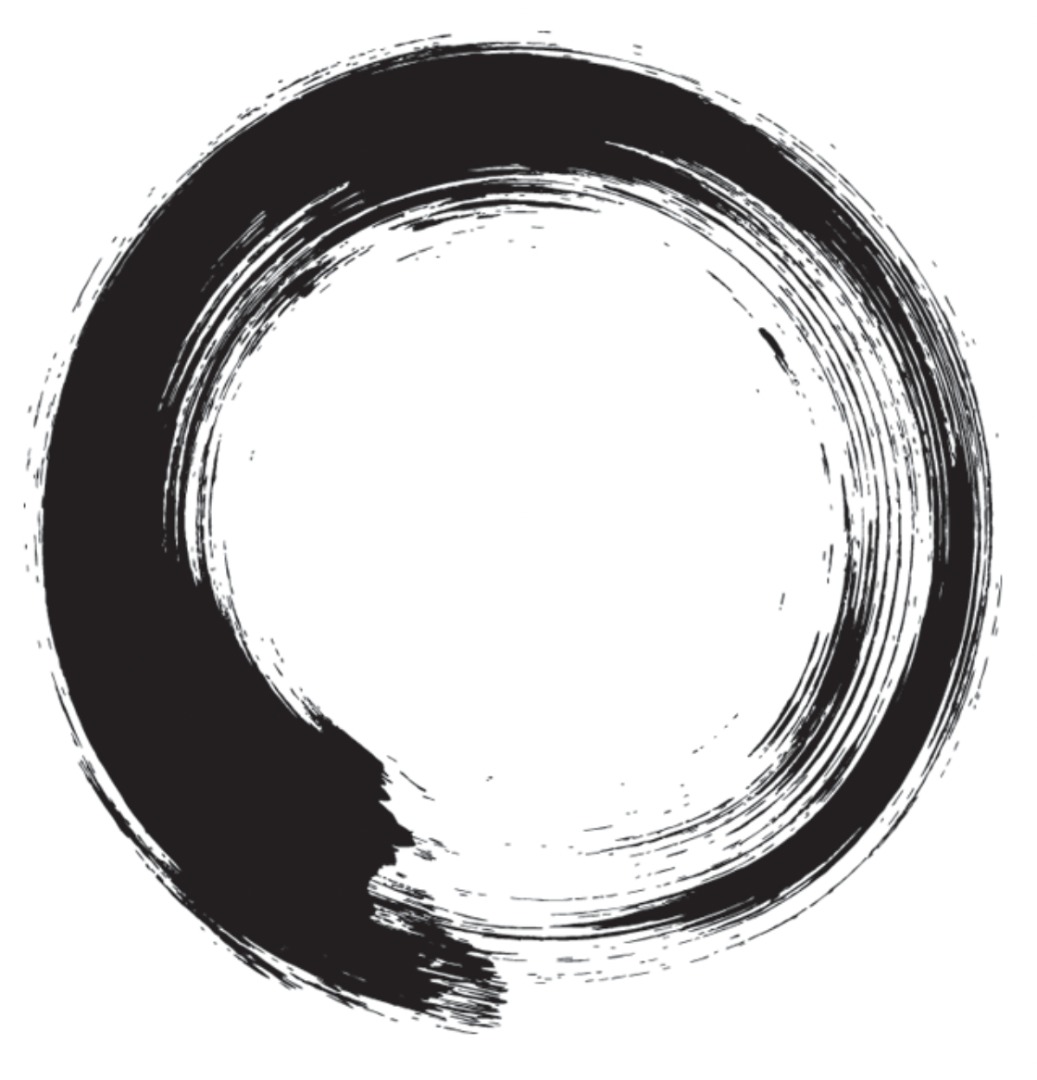
Enso
related